Making office days worth the commute
The workplace has changed. And along with it changed what employees expect from an office day.
For businesses, that creates a new challenge.
When employees can work effectively from home, how do you make time together in the office feel genuinely worthwhile without relying on bigger events, more elaborate perks or initiatives that create even more work for the teams running them?
There is no single answer. But sometimes, it's the smaller and more frequent experiences that make a difference.
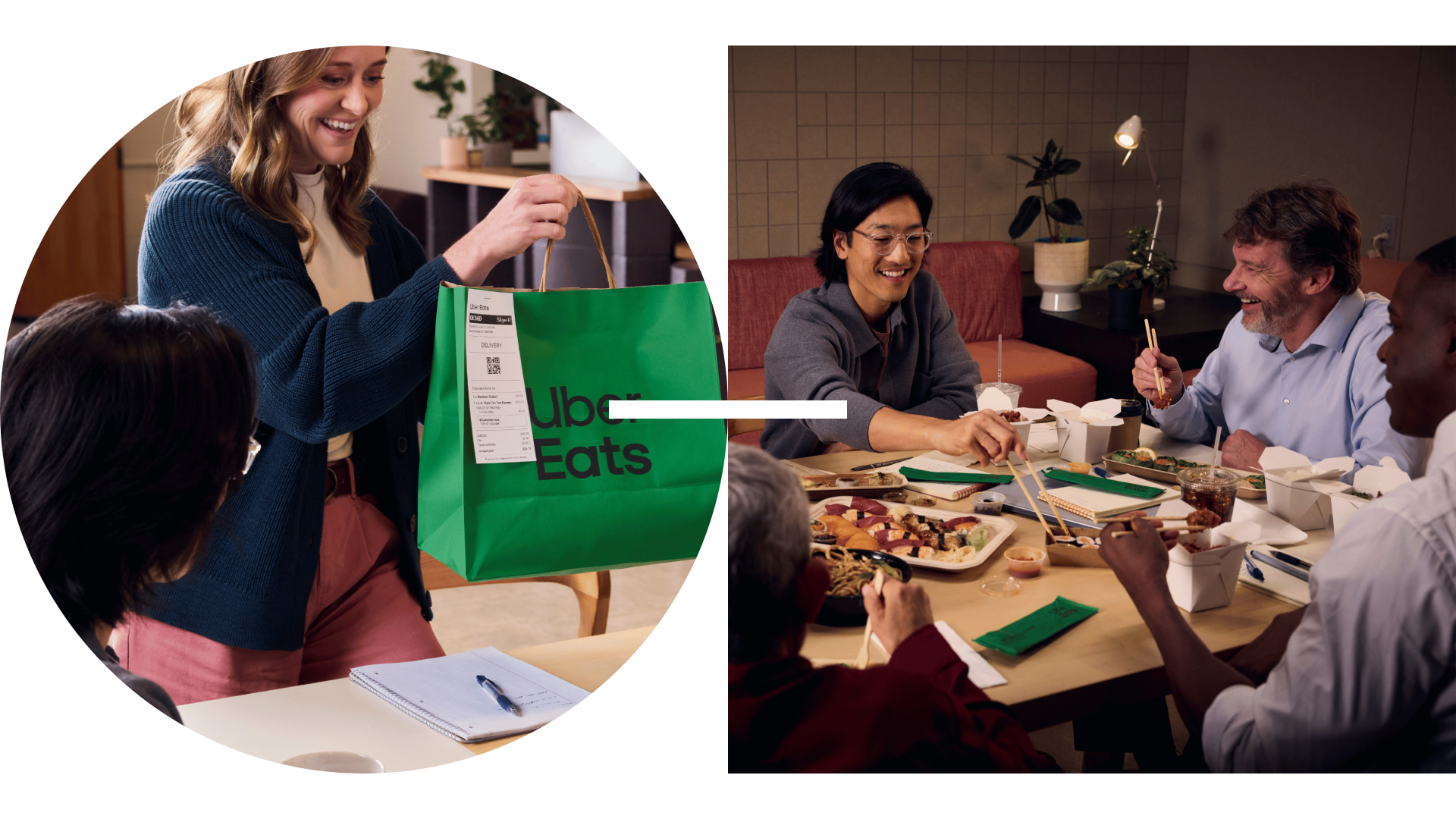
A coffee together to start the morning. Breakfast before the first meeting. A real-life conversation with a colleague you haven't seen in weeks. Lunch that gets the whole team around the same table. Something to eat during a townhall. Or an end-of-week get-together that gives everyone a reason to stay a little longer.
These moments may seem small but, together they shape how an office day feels, creating natural opportunities for people to connect throughout the day.
And perhaps that's because there's something innately human about sharing food. It has a way of bringing people together, whatever the occasion.
A workplace perk is only valuable if people actually value it
There are plenty of ways to invest in employee experience. The challenge for decision-makers is knowing which ones will actually make a difference.
Food has always been part of how we connect. In the workplace, it can create a natural moment to pause, come together and spend time with colleagues beyond the next meeting or deadline.
A team lunch creates a natural reason to stop, sit down and connect. People who spend much of their day moving between meetings get a necessary breather. New colleagues have an easier opportunity to get to know the team in a more casual fashion. Conversations can (and often do) move beyond the next deadline or project update.
For businesses, the value lies in making these moments easy to offer consistently, rather than treating them as one-off perks. That doesn't mean meals alone create a great workplace culture. But they can play a meaningful part in employee experience.
Employee expectations have moved on. Workplace benefits should too
A benefit only works if it works for the people using it.
And today's workforce is anything but one-size-fits-all. Different tastes, dietary needs, working patterns and personal preferences mean that what feels like a great benefit to one employee might offer very little to another.
Workplace food has sometimes struggled with exactly that. Think the same catering order, a limited selection or the assumption that food delivery means pizza, burgers and other familiar fast-food choices.
The reality today is very different.
With an Uber for Business meal programme, businesses can give employees access to a broad selection of restaurants on Uber Eats: from healthier options and local favourites; to different cuisines; exclusive choices; and familiar classics. It is exactly that breadth that matters. It means offering a benefit without having to decide what everyone should want.
And for employees, choice makes the benefit feel more personal. It's the difference between being offered something and being able to choose something that works for you.
83%
of employees say they save time ordering meals through Uber for Business
More choice doesn't have to mean less control
Employee flexibility shouldn't come at the expense of business oversight.
With an Uber for Business meal programme, companies can set budgets and define when and where employees can order, while employees choose what works for them.
The result is simple: less manual coordination, clearer visibility over spend and one programme that can flex across different workplace needs, from everyday meals to larger team moments.
Employees get a choice. Businesses keep control.
A benefit should work as hard as the business investing in it
For decision-makers, a good employee benefit needs to do more than sound attractive. It needs to be used, easy to manage and able to scale.
That's where a meal programme can earn its place. Rather than treating breakfast, team lunches, company gatherings or other food occasions as separate needs, businesses can bring them under one programme, with a clearer view of how it's being used and where the investment is going.
The same approach can work across different teams and occasions, while giving businesses the flexibility to set parameters that reflect their needs.
That matters as organisations grow. What works for one team in one office can quickly become fragmented when multiplied across departments, locations and budgets.
A more consistent approach can help reduce that complexity without making the employee experience feel standardised.
From a workplace perk to a strategic benefit
The most effective benefits sit at the intersection of what employees value and what the business is trying to achieve.
For People teams, that could mean strengthening the overall employee experience and offering something relevant to a broad workforce. For Workplace teams, it can support the moments and occasions that make office days work. For Finance and Procurement, visibility and defined budgets make the investment easier to manage.
And for employees? It can be remarkably simple: good food, more choice and one less thing to think about during a busy working day.
That's an important distinction. A meal programme doesn't need to be another initiative competing for employees' attention. It can become part of how the workplace already operates.
As businesses become more deliberate about their people investments, every benefit should answer three questions:
- Do employees value it?
- Can it be delivered efficiently?
- Does it support broader workplace priorities?
When all three align, food at work starts to look less like an occasional perk and more like a practical part of a modern workplace strategy.
More choice for employees. Made manageable for business.
We partner with 75,000+ of the UK's beloved brands, giving employees access to 100,000+ local restaurants in the Uber Eats app, with an average delivery time of under 30 minutes. With an Uber for Business meal programme, businesses can set budgets and rules in one dashboard, keep business and personal receipts separate, and access 24/7 support — bringing together the choice employees value with the control businesses need.
See what Uber for Business meal programmes can do for your team →
Select your preferred language
Overview
About us
Products
Solutions
By use case
By industry
Customer support
Support
Resources
Find out