Ridesharing in Brisbane
Uber
Uber is a technology platform that connects more than 330,000 riders in Brisbane to 4,000 driver-partners.
Every driver active on the Uber platform in Queensland has received a Driver Accreditation from the Department of Transport and Main Roads (DTMR). This accreditation signifies that the driver has completed a criminal background check, a driving history check, and a medical assessment, all verified by the Government.
Vehicles are also subject to strict standards. Driver-partners are only able to drive 4-door vehicles that are no more than 9 years old. All vehicles are inspected by an accredited third party inspector before the partner is permitted onto the Uber platform, and again once every 12 months afterwards.
Real time feedback features add additional layers of security. At the end of every trip, both riders and drivers provide feedback on the trip experience. Any issues that are reported are followed up on almost immediately.
Finally, all trips completed on the Uber platform are insured. In addition to the insurance provided by the individual ridesharing participant, Uber covers every trip with liability insurance issued by CGU (an Australian insurer), providing at least AUD$20,000,000 for third party bodily injury and property damage.
The ridesharing model being pioneered by Uber allows for vastly enhanced flexibility for drivers. Ridesharing participants use their own vehicles. In Brisbane more than half of partners drive for less than 10 hours a week. Unlike a taxi, which must be on the road 24/7 in order to to return the economic investment, they are able to work flexibly. A person who shares their ride for a few hours a week or month is no different to a real estate agent who uses their vehicle to drive around clients for a few hours on the weekend.
Benefits to cities
Uber’s goal is to provide safe, reliable, affordable and convenient transport for everyone, everywhere within minutes. In Brisbane we have made this a reality for hundreds of thousands of riders, with average arrival time under 4 minutes.
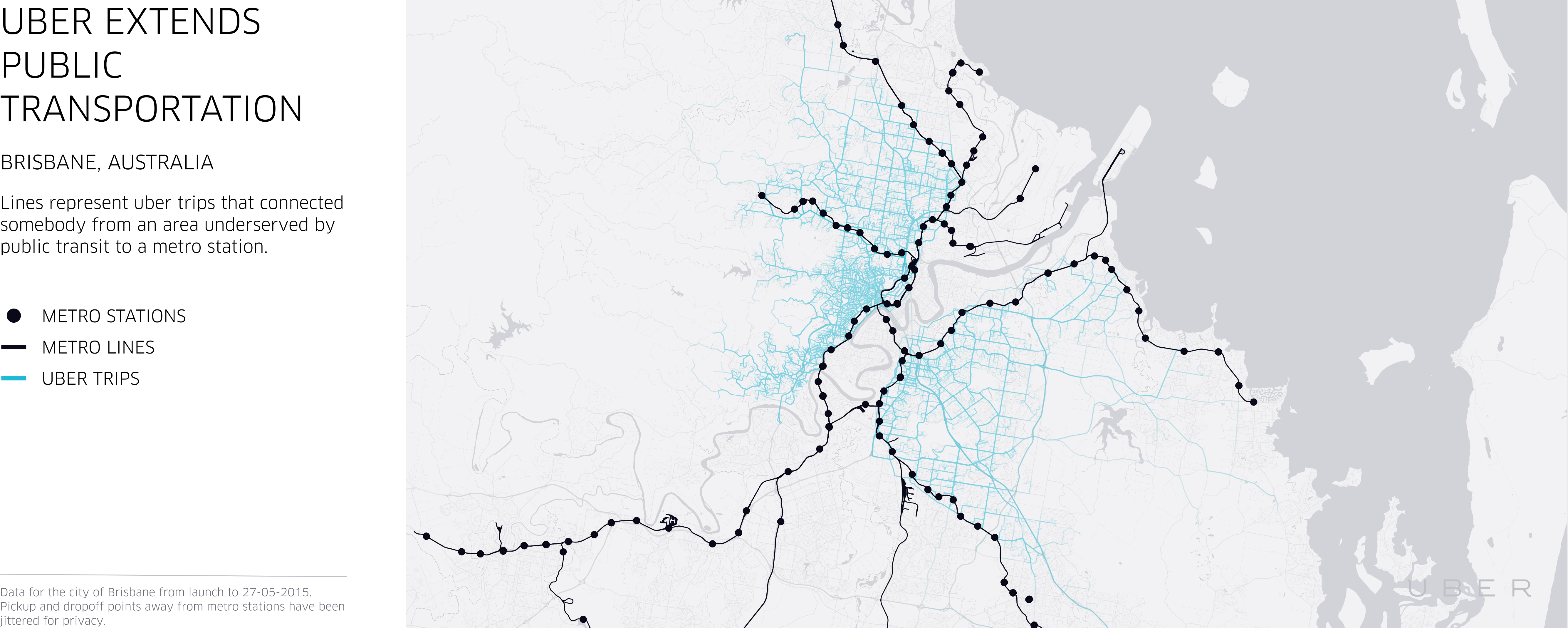
This is particularly beneficial for suburbs that don’t have easy access to public transport today, or where taxis have historically been scarce. These transportation deserts (1km from a medium frequency transportation service) are often the least well off neighborhoods.
In Brisbane 59% of trips begin or end in a public transport desert. In areas underserved by public transport, Uber provides a reliable and fast connection that feed commuters into, and effectively expands the reach of, existing public transport network. This has had the effect of making entire neighbourhoods more accessible, as commuters use Uber to reach train, tram and bus stations.
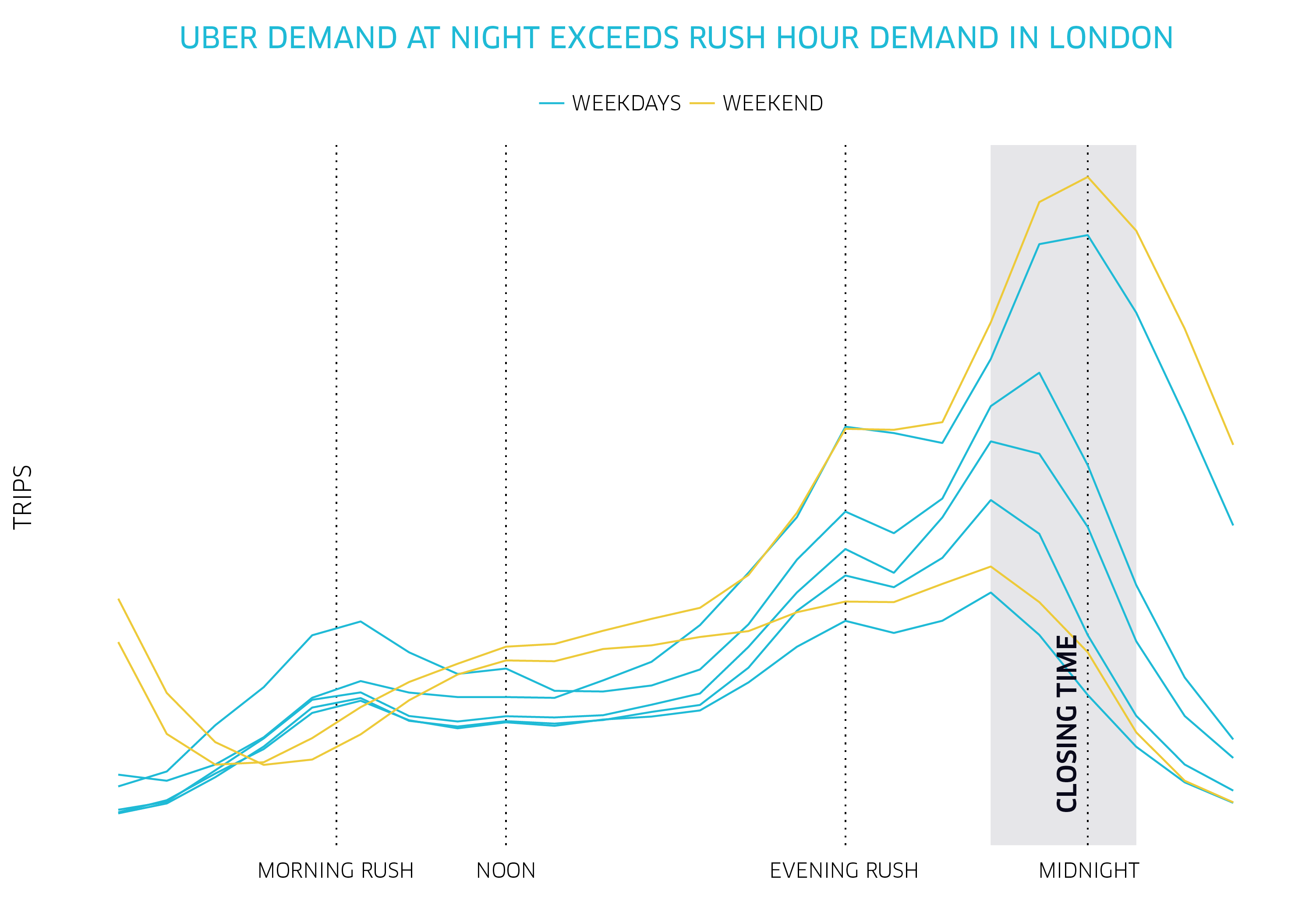
Uber can also help deal with other problems that plague cities around the world. One major example is drink driving. California, for example, experienced a six percent decline in alcohol-related crashes involving under-30 year olds following the launch of uberX. In London we’ve seen that the use of Uber peaks late at night as pubs close, which also happens to be when black cabs are least available. In fact in most cities in the world Uber’s rush hour is closing time.
Congestion is another example. Congestion is more than just an annoyance; it’s a drain on our cities, our economies and our planet.
So many people now use Uber in places like San Francisco where we see a ton of riders wanting to get to almost exactly the same place at the exact same time. Our uberPOOL service makes it possible for people going the same direction to share a car—which is great for riders because it reduces the cost of a trip and great for cities because it helps reduce congestion over time. In Los Angeles, for example, we completed more than 5 million uberPOOL trips in in 2015. That translates into 12.7 million driving kilometers and over 567,000 litres of fuel saved— and some 1,400 metric ton of CO2 emissions prevented.
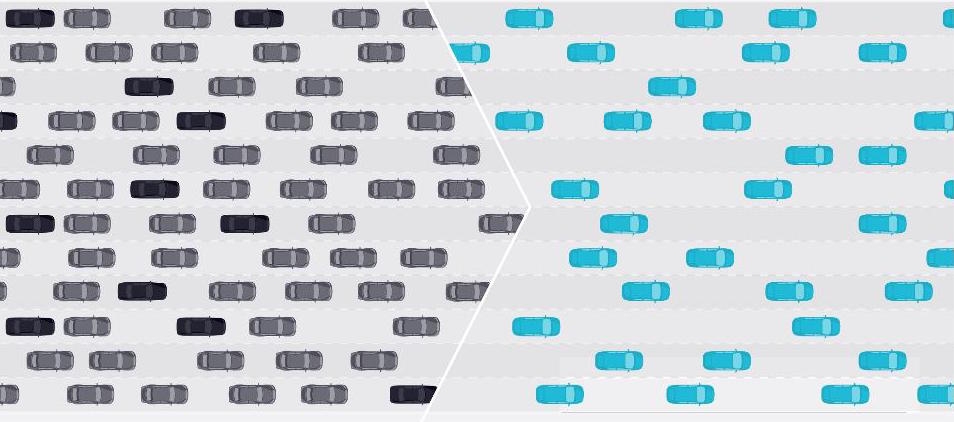
Over time these trips become a perpetual ride: a driver picks up one person, then another, then drops one of them off, then picks up another. It’s on-demand, hyper-convenient and more affordable because the cost of the trip is shared. That makes it less expensive than owning a car and a real game-changer for cities. Because by providing a convenient, cost effective alternative to ownership we can start to reduce the total number of cars. Cars are one of the most expensive assets people buy and they sit idle 96 percent of the time.
Innovative ridesharing solutions like uberPOOL, put more passengers in fewer cars – helping move us towards a brighter, cleaner and less gridlocked future.
Ridesharing – a new model that needs new regulations
Because of this different model, the risk profile of a ridesharing participant providing occasional rides is vastly different than a taxi service, where 70 percent of trips are collected on street with no rider pre qualification, and many fares are paid for in cash. Uber rides are pre arranged and all riders have their payment information stored with Uber before a ride begins. It’s clear that the risk inherent in these two models are different.
Luckily, there is already local precedent for different modes of personal transport with different risk profiles being regulated in different ways. For example, regulators have already recognised that chauffeured hire cars and taxis should have different rules because they have different risks and access to different portions of the market. Hire cars cannot pick up at ranks, they cannot accept on demand rides, and can only accept advanced pre-booked rides that are not anonymous. They have access to a smaller portion of the existing market than taxis and mitigate safety risks in different ways. Regulators have sensibly applied regulations specific to its use case and its access to the market, such as lower barriers to entry and lower fees and different safety requirements.
Another example is the current regulation of in-vehicle cameras. Like chauffeured hire cars, ridesharing does not accept anonymous rides and therefore is not required to have cameras. Taxis accept anonymous rides and street rank and hail work and carry cash and so are required to have a camera.
The same sensible approach should be applied to broader ridesharing regulation. Ridesharing only accepts on-demand and ready to ride trips. This means that ridesharing cannot access the majority of the existing market that come from ranks, street hails, and advance bookings. To require ridesharing to have the same economic barriers to entry to a taxi service is not supportable, just as a chauffeured hire car is not required to bear the same costs as a taxi because it has access to a different portion of the existing market.
Consumers already recognise this difference. Taxis are visually distinctive. They are equipped to accept cash. They collect passengers via spontaneous and anonymous street hails and in cab ranks. It’s not a question of a level playing field, it’s simply a question of appropriate regulation that recognises the different market models, their access to the market, and how they mitigate risks.
Ridesharing is a new mode of transport that is having a positive impact in Brisbane for riders, drivers and the city itself – and it’s only just beginning.