Ubers elektrifieringsuppdatering
Q3 2025 update: This page includes metrics for trips completed on Uber by internal combustion engine vehicles and zero-emission vehicles (ZEVs, such as battery EVs) from the beginning of the first quarter of 2021 to the end of the third quarter of 2025. Note that the scope of this report includes only Uber’s Mobility business (ridesharing).
Spåra vår resa mot nollutsläpp
Five years into our ambitious efforts to transition to a zero-emission platform, we’ve made meaningful progress. Today, Uber is the world's most widely available platform for zero-emission rides, with drivers adopting EVs (electric vehicles) up to 5 times faster than average motorists in the US, Canada, and Europe.
We’ve invested hundreds of millions of dollars to help interested drivers make the switch to electric through incentives, partnerships, and product enhancements—and it’s paying off. Increasingly, riders are experiencing their first EV on Uber, helping to normalize and accelerate the adoption of electric transport all over the world.
Our data shows that EV progress quickens when government and industry work together to get the economics right. In cities like London, Vancouver, and Amsterdam, where thoughtful policies, industry investment, and strong charging networks align, more than 1 in every 3 miles on Uber are now electric.
Despite this significant progress, major barriers remain to fully achieving our goals. High upfront EV costs, limited charging access, and inconsistent policy support continue to slow adoption. Based on current trends, we cannot meet our remaining mobility and delivery goals for 2025, and our 2030 goals will be out of reach without stronger, coordinated action across government and industry.
As we’ve said from the start: Climate is a team sport, and progress depends on collective action. That’s why we’re increasingly prioritizing efforts in cities where public and private investment are aligned.
While many key levers are outside our control, we remain deeply committed to this transition—not just because it’s the right thing to do, but also because it brings direct and strategic business benefits. Thousands of drivers around the world are taking home more money thanks to lower EV operating costs and rider demand for electric vehicles. Riders report higher satisfaction with the EV experience and are increasingly choosing EVs.
And finally, the future is shared, electric, and autonomous—and the coming wave of autonomous (electric) vehicles will create a major tailwind in achieving our sustainability goals.
Our latest update below outlines the progress to date, key insights, and areas of focus for 2025 and beyond.
ZEV-förare
Globally, more than 286,000 ZEV drivers were active on Uber’s app in Q3 2025. That’s over 57% more than the same period a year earlier.
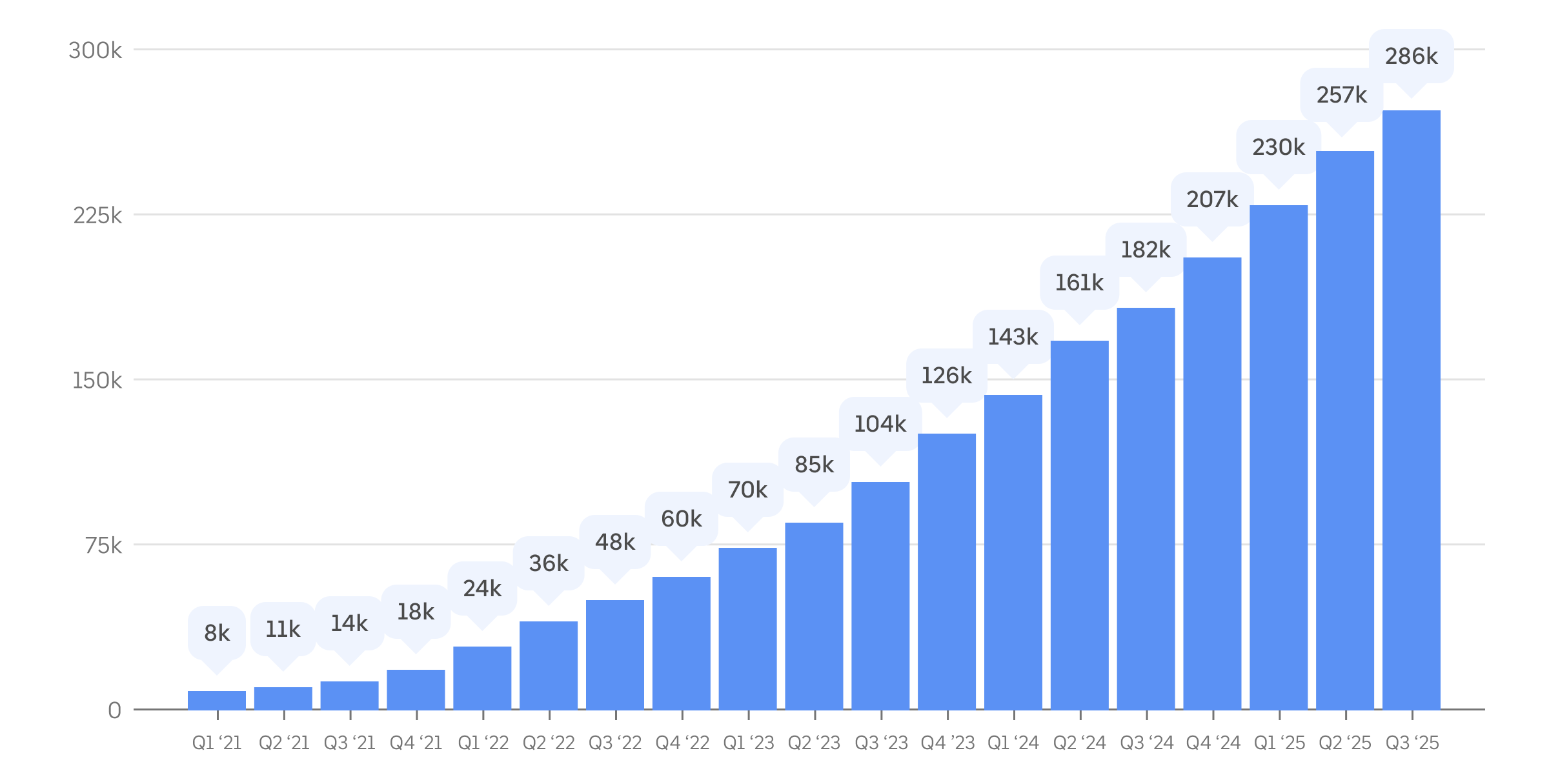
Mätvärde: Genomsnittligt antal aktiva ZEV-förare per månad på Uber, per kvartal, sedan första kvartalet 2021. Förare som använder Uber-appen räknas som aktiva under en viss månad om de har genomfört minst en resa under den kalendermånaden.
Utsläppsfria resor
In Q3 2025, ZEV drivers completed over 136 million trips using Uber, globally. That’s more than 17 ZEV trips on Uber every second, on average. The Q3 2025 total is 60% more than the number of ZEV trips completed on Uber during the same period a year earlier.
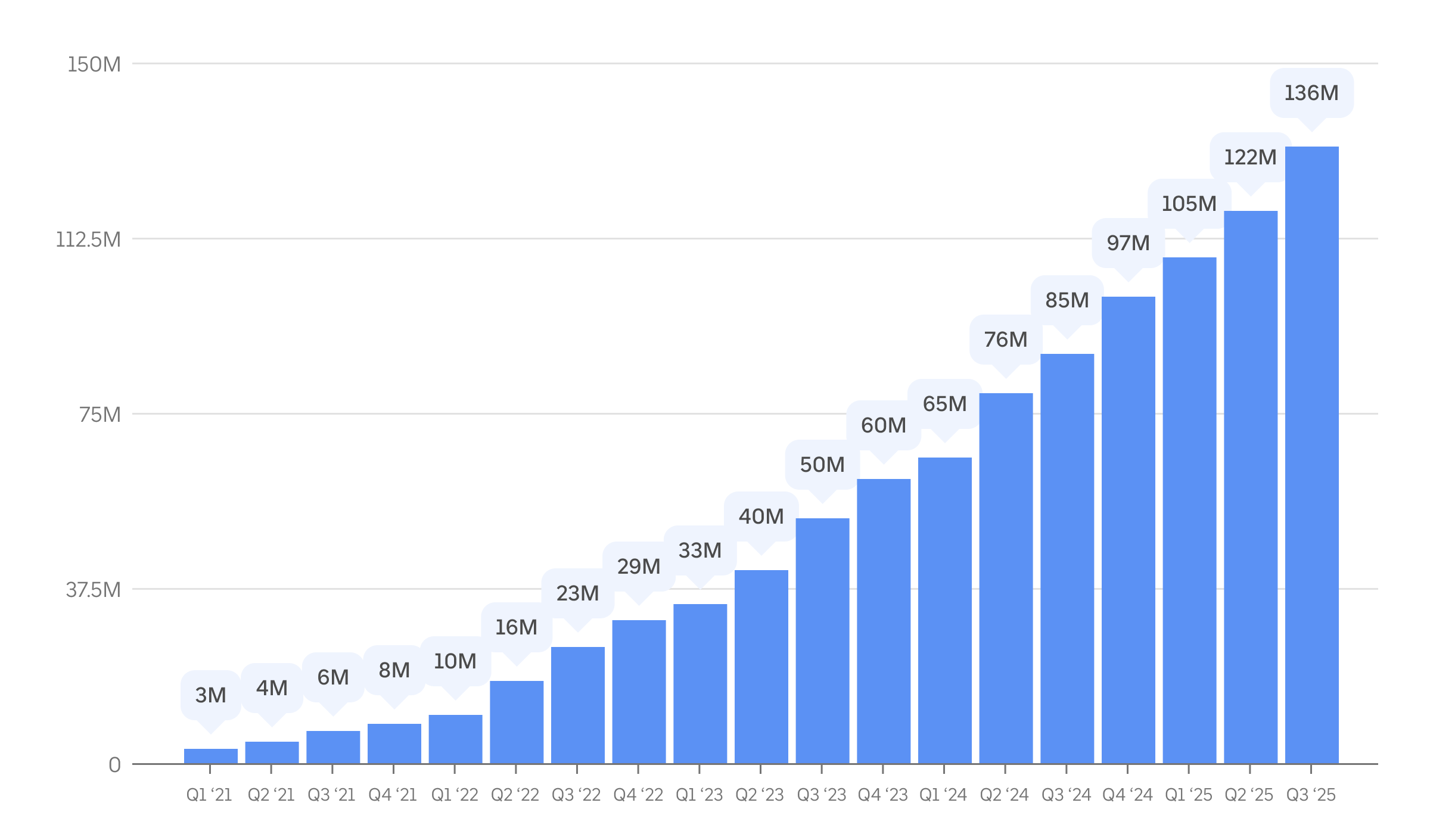
Mätvärde: Antal resor som ordnats i Uber-appen och genomförts av ZEV-förare, per kvartal sedan första kvartalet 2021.
Användning av utsläppsfria fordon
In Q3 2025, ZEV drivers completed 16.8% of all on-trip miles in Europe and 9.5% of all on-trip miles in Canada and the US—adoption levels many times above drivers in the general public.
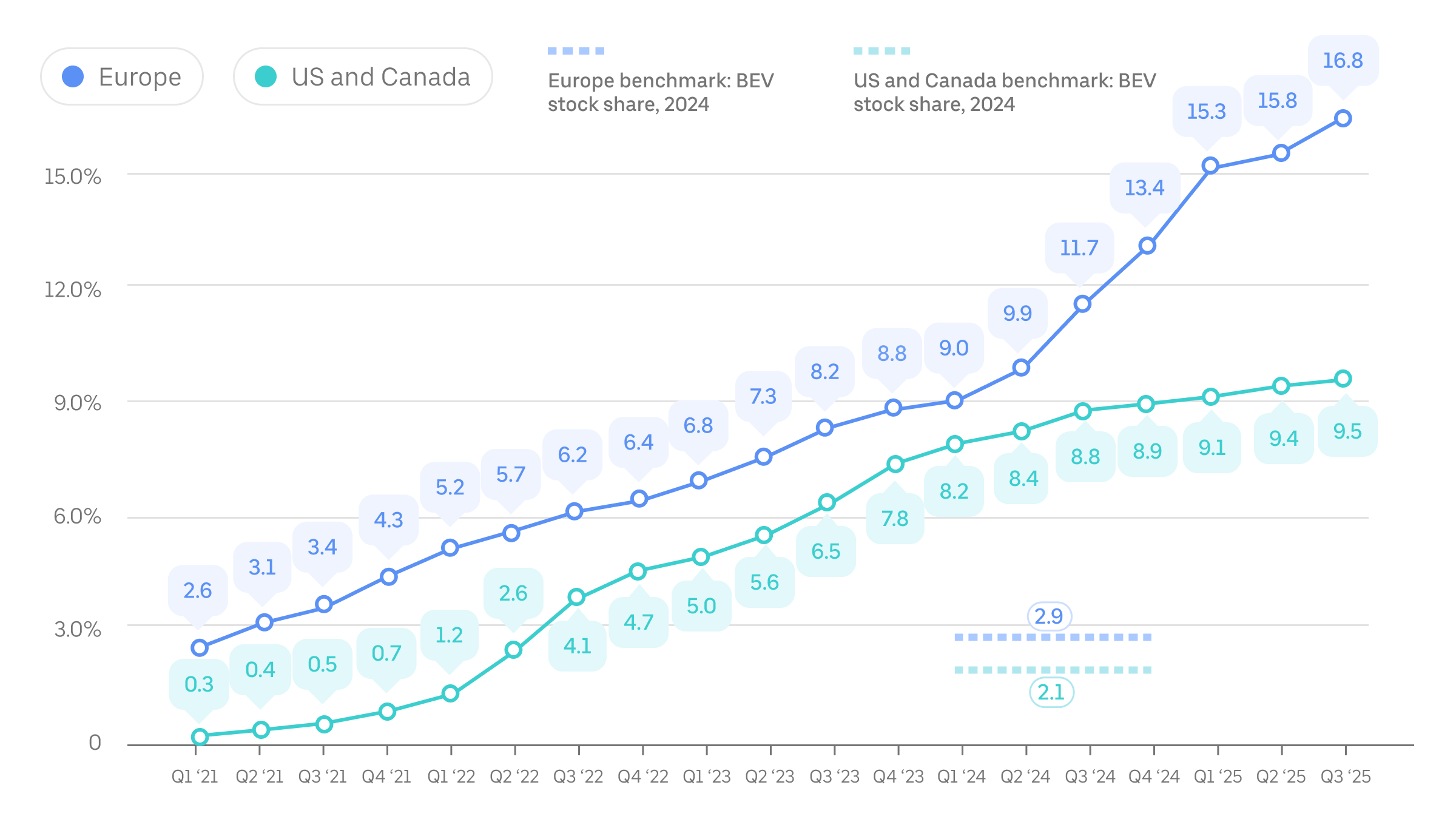
Metric: Share of on-trip miles completed in ZEVs compared with all on-trip miles arranged by the Uber app, by quarter since Q1 2021. Canada, US, and Europe benchmark data is as of 2024 (the most recently available at the time of this update) and is sourced from the International Energy Agency. “BEV” refers to battery electric vehicles.
Koldioxidintensitet för passagerare
År 2024 genererades i genomsnitt 123 gram CO₂ för varje kilometer som en passagerare reste med Uber i Europa och 212 gram CO₂ per kilometer i USA och Kanada. Jämfört med 2021 sjönk värdet för passagerarnas koldioxidintensitet med nästan 14 % i Europa och 6 % i USA och Kanada.
Koldioxidintensiteten för passagerare i Europa, USA och Kanada ökade något mellan 2023 och 2024 på grund av mindre minskningar av det genomsnittliga passagerarantalet och ökningar av ”tomma transporter” (fordonets körsträcka före och på väg mot att en passagerare hämtas upp).
Metric: Passenger carbon intensity, or the estimated grams of CO₂ per passenger mile traveled, is an annual efficiency metric used by Uber—and, increasingly, governments and companies around the world. In the case of ridesharing, or any on-demand mobility service, emissions produced by any deadhead miles are factored into the calculation.
For more details about how we calculate passenger carbon intensity, go to our methodology document. Note that significantly lower average fuel economy for vehicles on Uber in Europe versus the US and Canada explains most of the difference in carbon intensity in these 2 geographies. While the composition of vehicles that drivers use on Uber’s app in Europe is more efficient (with a higher proportion of ZEVs and hybrids), more-stringent fuel economy reporting standards in the US also contributes to this discrepancy. In addition, we lack access to sufficient input data to calculate passenger carbon intensity for trips completed in European markets before 2021.
Insikter och djupdykning
Say hello to Uber Electric (2025)
Electrifying ridehail in the US and Canada (2025)
Elfordon för alla: Ett balanserat införande av en mognande teknik (2024)
Gör hållbarheten till det bättre valet (2024)
Så hjälper du till att skapa eldriven rörlighet i hela Europa (2024)
Minskade utsläpp med hållbara rutter (2023)
Mätning av transporters koldioxidintensitet (2019)
Vanliga frågor
- Vad finns i Ubers elektrifieringsuppdatering?
Vår elektrifieringsuppdatering tillhandahåller resultatbaserade mätvärden till intressenter gällande koldioxidrelaterade utsläpp och elektrifiering av resor med passagerarfordon som möjliggörs via Uber-appen.
- Varför publicerar ni den här uppdateringen?
Den här uppdateringen, som bygger på verklig användning av vår mobilitetsplattform, bidrar till att ge större transparens om vår påverkan på elektrifieringen och hjälper oss att förbättra vårt arbete med att stödja effektiviteten på vår plattform.
- Vilka är de viktigaste mätningarna ni använder i Elektrifieringsuppdateringen?
Mätvärdena omfattar följande:
- Användning av utsläppsfria fordon bland förare på Uber (andel körda kilometer i utsläppsfria fordon), vilket är ett mått på hur nära vi är vårt mål om 100 % utsläppsfria transporter på Uber globalt senast 2040.
- Koldioxidintensitet för passagerare, vilket mäter utsläppen från varje passagerarkilometer.
- Hur kommer den här uppdateringen att förbättra utsläppsminskningen och elektrifieringen av resor med Uber?
Vi har en ambitiös målsättning att minska koldioxidutsläppen för passagerare för resor och öka användningen av utsläppsfria fordon på Uber. Mätning och öppenhet kring framstegen är viktiga steg på vår resa.
- Reser passagerare med Uber istället för att välja alternativ med lägre koldioxidutsläpp såsom kollektivtrafik?
Resor via Uber-appen är ett av många tillgängliga transportalternativ för personer som letar efter en resa. Hur man väljer att resa beror i stor utsträckning på lokala marknadsförhållanden. Vår analys av data från US National Household Travel Survey visar att en större användning per hushåll av de mest hållbara transportsätten (kollektivtrafik, promenader och cykling) överensstämmer med en större användning av samåkningsalternativ och andra lösningar på begäran.
- Kommer ni att mäta samma data för andra länder eller regioner runtom i världen?
Many of the above metrics now cover all passenger trips completed with the Uber app globally. We regularly report on carbon emissions and other impact areas resulting from trips on Uber.
- Hur ofta förväntar ni er att tillhandahålla Ubers elektrifieringsuppdatering?
Vi uppdaterar mätvärden minst en gång per år och kan uppdatera vissa mätvärden oftare. Vi kommer att publicera mätvärden för utsläpp (t.ex. passagerarnas koldioxidintensitet) årligen, sammanfattade per kalenderår.
- Vad menar ni med ”utsläppsfria fordon”?
We use the term “zero-emission vehicle” (ZEV) the same way the California Air Resources Board (CARB) and Europe’s Transport & Environment (T&E) do: to refer to vehicles that produce no direct CO₂ emissions or other criteria air pollutants (such as NOx, particulate matter, CO₂, and SOx) from the on-board source of power. Regional variations should be considered at the reader’s discretion.
Drivers using Uber’s app use 2 types of ZEVs today: battery electric vehicles (battery EVs) and, very occasionally, hydrogen-powered fuel cell electric vehicles (FCEVs).
Of course, the “zero” in ZEV refers to no emissions from the proverbial “tailpipe” of the vehicle and not necessarily all the emissions that can be accounted for from production to disposal of the vehicle and its energy source. All accounted for, however, life-cycle analyses by independent experts show that “emissions over the lifetime of average medium-size battery EVs registered today are already lower than comparable gasoline cars by 66%–69% in Europe, 60%–68% in the United States, 37%–45% in China, and 19%–34% in India.”
- Kommer ni att mäta påverkan från er leveransverksamhet?
Our Electrification Update currently covers electrification and emissions metrics only for our Mobility business (ridesharing). We aim to include our progress on delivery emissions and electrification in the future.
In terms of packaging, Uber continues to invest in helping merchants transition to sustainable options. As with electrification, however, progress depends on collective action. We’re prioritizing efforts in cities where public and private investments are aligned. For example, in France over 60% of packaging used on the platform is recyclable, reusable, or compostable, supported by national policy and local incentives.
While progress has been made, based on current trends we cannot meet all 2025 goals, and our 2030 goals will be out of reach without stronger, coordinated action across government and industry.
While many key levers are outside our control, we remain deeply committed to this transition. To learn more about Uber’s approach to more-sustainable packaging with merchants, consult our Uber Eats for Merchants web page.
- Rapporterar Uber Scope 1-, 2- och 3-utsläpp, och var kan de i så fall hittas?
Uber discloses Scope 1, 2, and 3 emissions in our Governance Strategy and Engagement Report and to CDP. You can find our most recent score in CDP’s public corporate score search. These emissions estimates have received limited assurance from an independent third party.
This page and the related information, updates, reports, and web pages (the “Report”) contain forward-looking statements regarding our future business expectations and goals, which involve risks and uncertainties. Actual results may differ materially from the results anticipated. Additionally, this Report is provided for informational purposes only and should not be relied upon for business or vehicle acquisition decisions. Undue reliance should not be placed on the forward-looking statements. We undertake no duty to update this information unless required by law. For more information on Uber’s strategy, please go to investor.uber.com.
Certain data disclosed in this Report has received limited assurance from LRQA. Data discrepancies with assurance may be present due to rounding methodologies.
The use of terms in this Report such as “drivers,” “couriers,” “earn,” “zero- emission vehicle,” and “sustainable packaging” are general and follow the general use case of the words by Uber Technologies, Inc. Regional variations of words should be considered at the reader’s discretion.
An overview of Uber's use of carbon offsets can be found here.
Om
Om